

Why Your Small Business’s Google Visibility in 2026 Depends on AEO
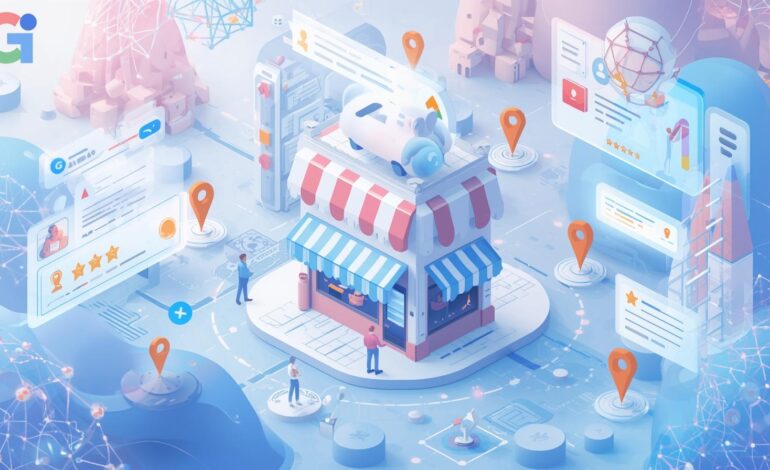

Optimizing for the Future: AEO and Enhanced Search Performance
The operational landscape for digital marketing professionals is undergoing rapid transformation. We’re discussing why your small business’s Google Visibility in 2026 depends on AEO, a necessary adjustment for any entity competing for organic traffic. The dynamics are changing fundamentally.
The traditional parameters of search engine optimization, frankly, they just aren’t cutting it anymore. Search engines, particularly Google, are prioritizing direct answers over extended link lists and generic optimization efforts.
This fundamental pivot requires business owners and marketing teams to rethink content creation immediately. Failing to adapt now guarantees significantly reduced performance by the projected 2026 timeline. That means reduced traffic, reduced authority, and lower potential revenue streams.
Defining the Shift: Moving Beyond Traditional SEO Metrics
Understanding the mechanics behind this algorithmic evolution is key. It involves the integration of large language models (LLMs) which demand structured, authoritative answers, not just high keyword density.
We mustn’t confuse old-school optimization tactics with the nuanced requirements of Answer Engine Optimization. AEO focuses on providing the definitive answer Google requires, often for placement directly in Featured Snippets or rich results.
This approach requires precision in language and an acute understanding of user intent that transcends mere phrase matching. What does the user truly need to know? That’s the question.
Why Your Small Business’s Google Visibility in 2026 Depends on AEO: Anticipating Algorithmic Logic
The era of ten blue links, as we knew it, is rapidly phasing out. Users now expect concise, reliable information presented directly on the Search Engine Results Page (SERP), frequently without clicking through to the source website.
This shift presents a challenge, certainly, because while you retain authority, the physical traffic volume might stabilize or potentially decrease if conversion pathways aren’t properly integrated into the search snippets themselves. Strategizing around the zero-click search environment becomes critical for small businesses relying on high-volume website visits.
Furthermore, preparing for 2026 means recognizing that voice search and conversational queries will only increase their market share dramatically. Your content must sound conversational, yet remain structured logically and technically sound. A confusing presentation will yield poor results.
Structural Content Requirements for Optimal AEO Ranking
To effectively gain Google Visibility, small businesses must restructure their website content architecture. We’re talking about optimizing for clarity, directness, and informational completeness within a confined answer space.
You’ve got to prioritize schema markup adoption, and not just basic organizational schema either. Frankly, this is non-negotiable for identifying key entities and attributes within the text for the LLMs to process quickly and accurately.
For example, defining ‘Who we are,’ ‘What we do,’ and ‘Our primary service area’ using specific structured data types helps the answer engine validate relevance instantaneously. Ignoring this level of technical optimization risks being completely overlooked by advanced search indexing.
- Implement FAQ Schema for Q&A sections on service pages.
- Utilize How-To Schema for step-by-step guides where applicable.
- Ensure organization markup accurately reflects corporate structure and location data.
Operationalizing Data Integrity: The Business Perspective
Marketing professionals, we’re often focused purely on vanity traffic numbers, often neglecting the accuracy of the underlying business information. AEO penalizes inconsistency severely because the objective is high trust.
Think about your critical business identifiers—Name, Address, Phone Number (NAP). If this essential operational data varies across owned digital assets, the answer engine cannot certify your business as the definitive, trustworthy source for those local queries.
We must ensure absolute uniformity across the Google Business Profile, the primary website, and any relevant third-party industry directories. This operational cleanliness significantly enhances perceived authority and improves your probability of earning featured positions. Consistency is key to long-term Google Visibility.
Leveraging E-E-A-T in the AEO Context
Google’s emphasis on Experience, Expertise, Authoritativeness, and Trustworthiness (E-E-A-T) takes on heightened importance within the AEO framework. The underlying system needs to trust the generated answer implicitly before presenting it to a global audience.
How does a small business, often lacking the brand recognition of an enterprise, demonstrate this authority? Primarily through verifiable credentials and transparent authorship regarding the content production process. Showcasing actual hands-on experience is vital now; theoretical knowledge won’t suffice.
We’re talking about linking content authors to their professional biographies and ensuring any claims or statistics cited are supported by credible, external evidence, if applicable. Authenticity and transparency matter immensely in establishing necessary domain authority. Furthermore, recent updates demand demonstrable proof of that experience.
Refining Content Strategy for Conversational Search
Optimizing content for AEO means shifting from simple keyword optimization to topic modeling and anticipating conversational patterns. How people speak their questions differs markedly from how they type them into a traditional search box.
The strategy necessitates developing content clusters that address every facet of a customer’s journey and potential query paths. This provides the AI with comprehensive coverage of the subject matter, certifying your site as a knowledge hub.
For a small manufacturing business, this might mean creating definitive articles on ‘What materials are best for X product’ or ‘The typical lifespan of Y component.’ These are direct answers that feed the answer engine’s needs.
Maintaining enhanced search performance demands vigilance, certainly. Business leaders need to allocate financial and personnel resources now for this technical transition. Neglecting this crucial strategic pivot means ceding vital market space and long-term Google Visibility to competitors who are already ahead of the curve in AEO implementation. It’s simply not good business practice to wait until 2026 to start reacting to established algorithmic preferences.
Frequently Asked Questions About AEO Implementation
What is the core difference between traditional SEO and Answer Engine Optimization?
Traditional SEO generally focuses on improving ranking position within the standard ten blue links list based on keywords and backlinks. AEO prioritizes the direct derivation of information for placement in rich results or snippets, focusing intensely on semantic clarity and structured data.
Should small businesses abandon traditional keyword research completely?
No, absolutely not. Keyword research still informs the topics and the language users employ. However, the objective shifts from maximizing keyword count to ensuring that the content surrounding the keyword provides the single, most authoritative answer possible.
How quickly can a business expect to see results after implementing AEO techniques?
The timeline varies substantially depending on the existing site’s authority and the competitive density of the industry. Structural changes like schema markup can impact indexing rapidly, but securing top-tier rich snippets, which signal high Google Visibility, often requires sustained effort and verification of E-E-A-T over several months.
Is AEO only relevant for informational content?
AEO is highly relevant across all content types, including commercial intent pages. For instance, optimizing product pages using structured data to define pricing, availability, and reviews ensures those details can be immediately extracted for comparison features or purchasing prompts within the search ecosystem.
What specific tools assist in identifying AEO opportunities?
Tools focusing on rich snippet tracking, schema validators, and semantic keyword grouping are indispensable. We recommend using Google Search Console’s enhancement reports to monitor how Google is processing your structured data and identifying potential issues quickly.
To maintain market relevance, especially considering the rapid advancements in search technology, small businesses must proactively adjust their digital approach. Focusing solely on outdated metrics is a recipe for operational disappointment. The path forward requires technical precision and a commitment to providing genuinely useful, structured content. By implementing Answer Engine Optimization, you are ensuring your operational data is accurate and your expertise is recognized. This proactive effort determines whether your organization gains or loses valuable market focus. Ultimately, your future depends entirely on gaining genuine Google Visibility.